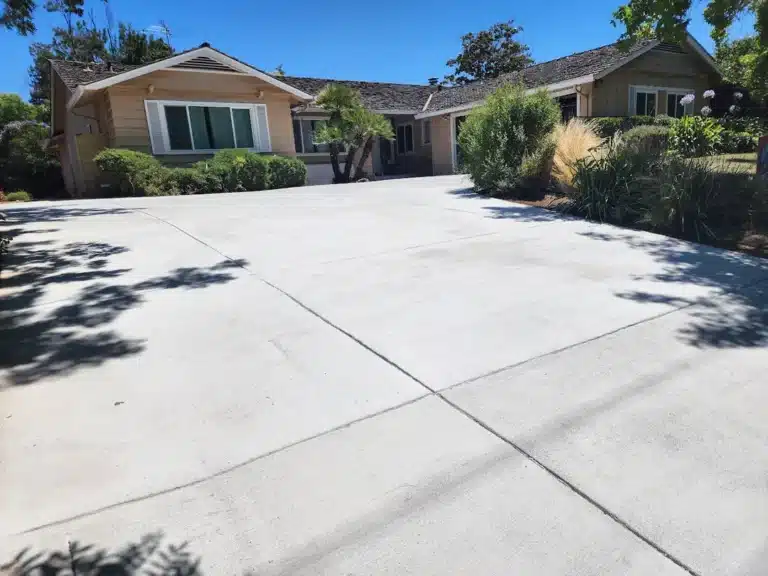
Commercial Concrete Pavement
Concrete Paving for California Commercial Properties
We build concrete paving for parking areas, truck aprons and loading zones, planned around your soil, your traffic and the hours your property has to stay open.
Tell Us Where, and We'll Price Your Project
By submitting you agree to be contacted about your project. We never sell your information.
Got It. We're on the Way.
Your request is in front of our team. Expect a call from a real estimator, usually within one business day.
Properties We Work With
Service Scope
What Does Concrete Paving Include?
Concrete paving is the construction of rigid pavement. It is a cast-in-place concrete slab placed over a prepared subgrade and divided into panels by planned joints, so it carries vehicle loads and controls where it cracks. On commercial properties it covers drive aisles, parking areas and the spots that take the heaviest punishment. The exact scope, thickness and joint plan are set after we evaluate your site.
Existing pavement removal
Truck aprons and loading areas
Subgrade and base work
Curb and gutter tie-ins
Dumpster and trash pads
Joint sealing
In Depth
Concrete Paving Explained
Concrete pavement works by stiffness. A slab does not flex under a wheel the way asphalt does. It spreads the load across a wide area of subgrade, which is why it holds up where trucks turn, brake and park on the same footprint every day. The American Concrete Institute’s current guide for commercial parking lots and site paving, ACI PRC-330-21, is written for light-duty, unreinforced, undoweled lots. Areas that carry regular truck traffic call for their own thickness and load-transfer decisions.
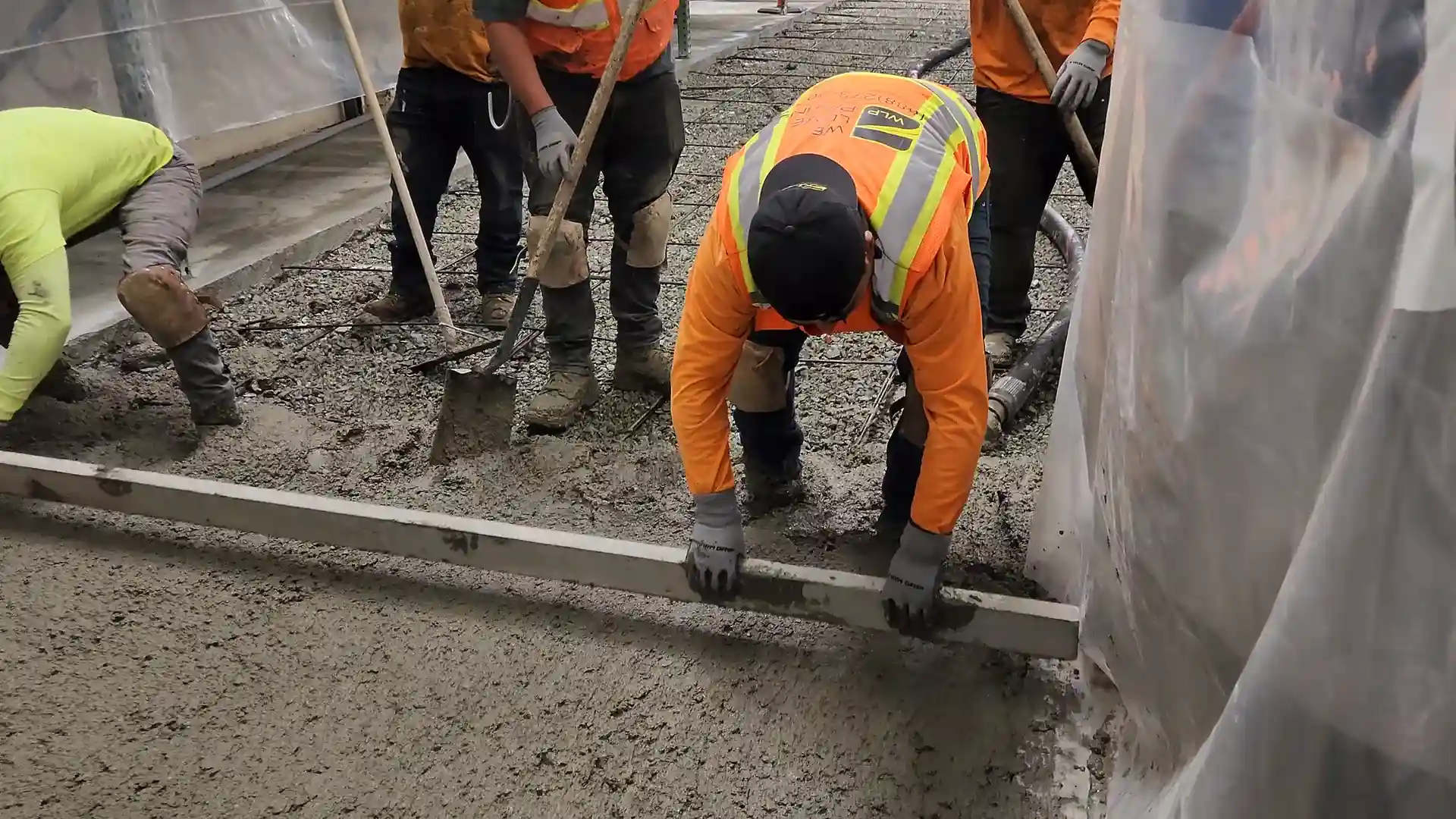
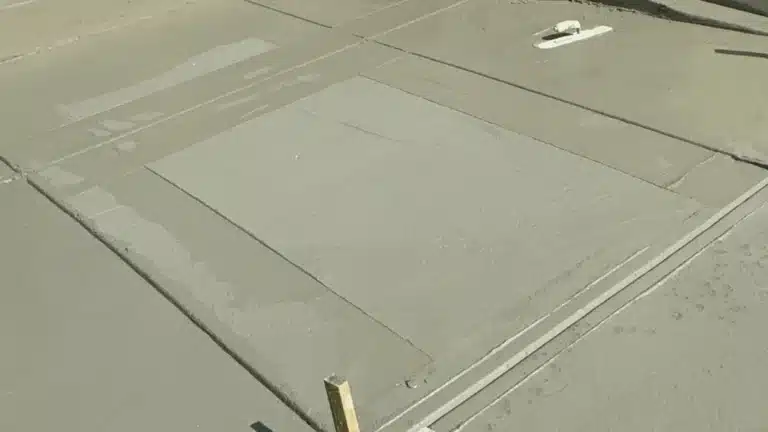
Whether that pavement lasts depends less on the strength of the concrete than on what sits under it and where it is cut. Every slab shrinks as it cures, so it will crack. Contraction joints, spaced in proportion to slab thickness and sawn at the right time, decide where those cracks land. That is why two lots with the same cracked panels can need different work. One has joints spaced too far apart for its thickness, another has expansive clay moving the slabs, and a third has heavy loads crossing joints with no load transfer.
Why We Love Paving
Why Choose Us for Concrete Paving
Concrete is hard to correct once it is placed, so the contractor’s credentials and record matter before the first truck arrives. Each point below is something you can check on your own.
Licensed for Paving Work
We Love Paving holds an active CSLB license, #1049649, in the C-12 Earthwork and Paving classification, with a contractor’s bond and workers’ compensation on file. You can confirm its status on the CSLB website before you sign.
Written Concrete Coverage
Qualifying concrete installations can carry 5-year structural coverage against significant settlement, displacement or heaving, within approved load limits. The written terms also spell out what is excluded, such as normal shrinkage and hairline cracks.
Registered for Public Works
We are registered with the California Department of Industrial Relations as a public works contractor, PWCR #1000590190. Public agencies, schools and districts check this registration before awarding paving work.

Common Conditions
What Is Affecting the Pavement on Your Property?
Most concrete paving calls start with a problem in a specific area of the lot, not across the whole site. These are the conditions we see most often and how we approach each one.
IF YOU HAVE THIS PROBLEM
Asphalt Rutting Where Trucks Turn.
Our fix: we replace the high-stress zone, such as a trash pad, truck apron or loading area, with a concrete section sized for that traffic and tied into the surrounding asphalt.
IF YOU HAVE THIS PROBLEM
Settled or Faulted Panels.
Our fix: we remove the failed slabs, correct the subgrade or base beneath them, and place new panels with joints and load transfer matched to the traffic crossing them.
IF YOU HAVE THIS PROBLEM
Open, Spalled or Unsealed Joints.
Our fix: we repair damaged joint edges and clean and reseal the joints so water stops reaching the subgrade. We also check whether any panels need full-depth repair.
How It Works
Why Is Concrete Paving a System?
A concrete slab is only as reliable as the layers and decisions beneath it. Each step depends on the one before it, and a shortcut early on tends to show up later as cracking or settlement.
PROJECT SPOTLIGHT
See It From Start to Finish
Browse recent work by our crews, including concrete paving projects, from existing conditions to the finished surface.
-

Santa Clara, CA
Santa Clara Industrial Concrete Project
- The condition
- An industrial office property with intense daily traffic, uncertain soil conditions and unclear parking zones.
- The work
- Grading and subgrade compaction, structural concrete work, Hot Mix Asphalt to Caltrans specifications, and fast-curing striping for stalls and walkways.
- Materials
- Hot Mix Asphalt, structural concrete, traffic paint
- Operational constraint
- Result
- A durable surface for heavy traffic, with clearly marked parking and pedestrian routes.
-
Santa Clara, CA
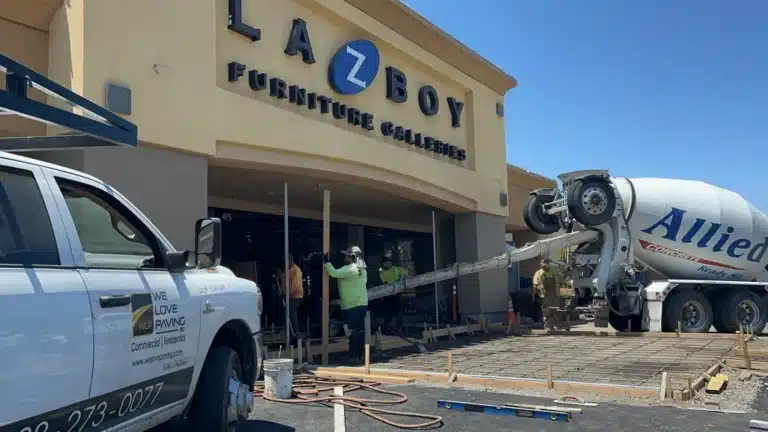
Santa Clara Concrete Project
- The condition
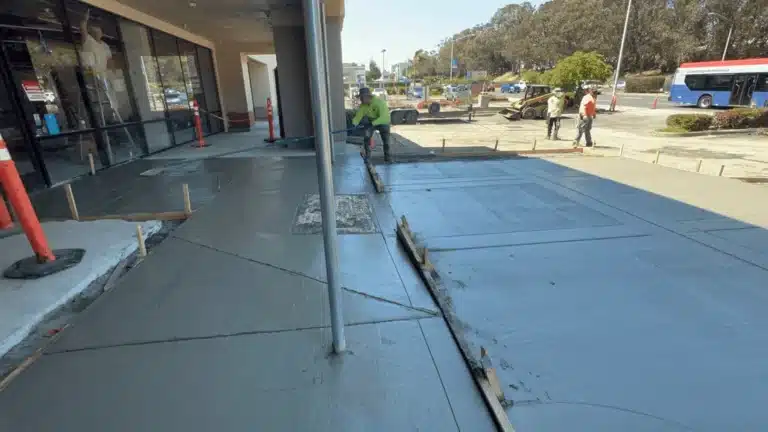
- A concrete slab to be poured inside an active commercial site under variable weather.
- The work
- Subgrade preparation, precisely leveled wood forms, continuous ready-mix pour to avoid cold joints, then monitored curing treatments.
- Materials
- Ready-mix structural concrete
- Operational constraint
- Work stayed inside a restricted zone so adjacent operations were not disrupted.
- Result
- A level, monolithic slab built for heavy traffic, with fewer trip hazards.
-
San Francisco, CA
San Francisco Concrete Project
- The condition
- A raw site with complex slopes that threatened perimeter soil stability, and existing walls blocking utility and drainage lines.
- The work
- Fine grading, 6 inch Class 2 rock base, concrete walkways and about 325 linear feet of walls, a 6.5 foot retaining wall with 14 pilasters, a rebar slab, 3 inches of HMA and core-drilled conduits.
- Materials
- Reinforced concrete, Class 2 recycled rock base, Hot Mix Asphalt
- Operational constraint
- Result
- Stabilized slopes, engineered drainage and a paved lot finished with an ADA-compliant pedestrian gate.
-
Merced, CA
Concrete Parking Lot Merced Project
- The condition
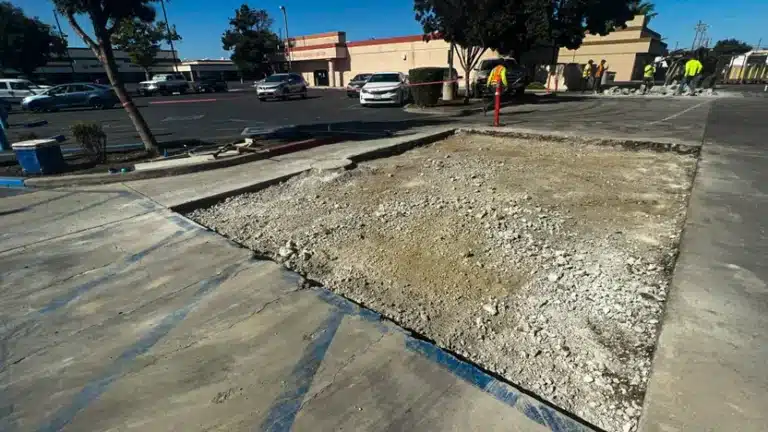
- Old, unstable materials and a drainage risk in an active Pep Boys parking lot.
- The work
- Full removal, excavation to subgrade, compacted crushed stone base, steel-reinforced high-strength concrete and laser-leveled finishing with precise slopes.
- Materials
- High-strength concrete, rebar and mesh, crushed stone base
- Operational constraint
- Pep Boys stayed open. Vehicle flow was managed so customers kept access during heavy work.
- Result
- A reinforced concrete lot with no ponding, built for heavy traffic and low maintenance.
-
Redwood City, CA
Redwood City Industrial Concrete
- The condition
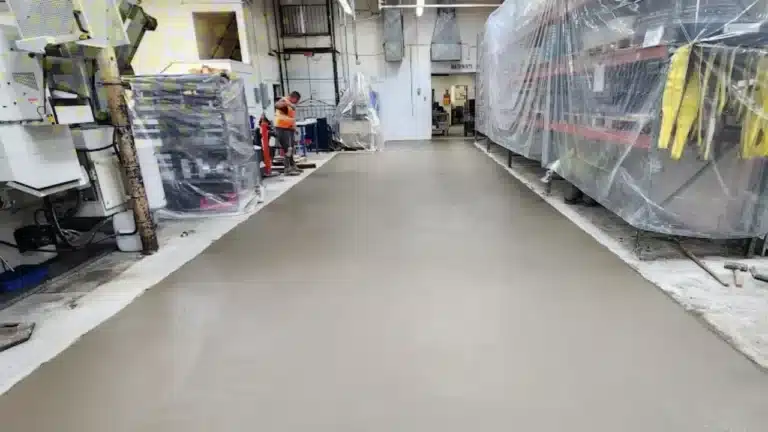
- An industrial floor with deep fractures that compromised operational safety.
- The work
- Full-depth removal, soil stabilization, compacted aggregate sub-base, steel rebar grid, pumped high-strength concrete and a power-troweled finish.
- Materials
- Rebar-reinforced high-strength concrete
- Operational constraint
- Surrounding heavy machinery had to keep working. Skid-steers handled demolition without disrupting adjacent areas.
- Result
- A monolithic slab with high load capacity, safe for forklifts and heavy equipment, with no overlays needed.
-
Livermore, CA
Livermore Stamped Concrete
- The condition
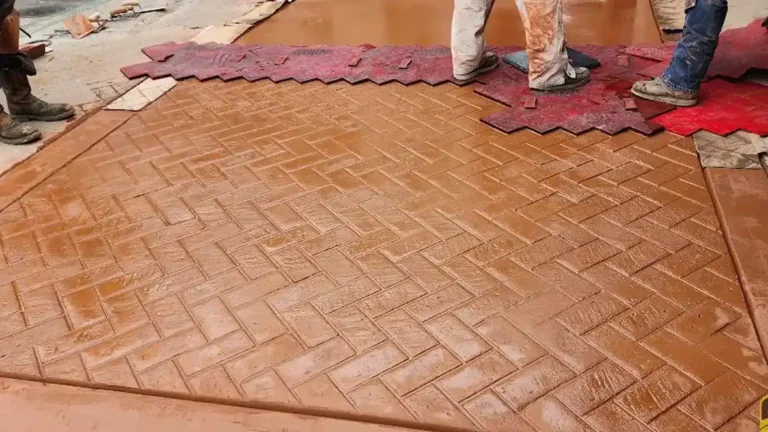
- A plain commercial surface that needed to become a durable focal point for pedestrians and light vehicles.
- The work
- Integral red concrete poured over reinforcement mesh, hand leveled, then stamped in a herringbone pattern with polyurethane molds within the set window.
- Materials
- Integral color stamped concrete, reinforcement mesh
- Operational constraint
- Result
- A brick-look surface with color through the full slab, a denser wearing layer and low maintenance.
Scope and Pricing
What Affects the Scope of Concrete Paving?
No two concrete projects are priced from the same sheet. These are the site conditions that change thickness, sequencing and cost, and we confirm each one during the site evaluation.
Soil and Subgrade
▸ Expansive clay under the slab
▸ Soft or wet subgrade needing replacement
Loads and Traffic
▸ Truck routes and fire lanes
▸ Thickness, reinforcement or dowels required
Access and Phasing
▸ Removal and haul-off of existing pavement
▸ Entrances that must stay open
Grades and Tie-ins
▸ Drainage slopes and existing elevations
▸ Accessible routes, curbs and gutters
Related services
Related Services
Our main services, from accessibility upgrades to paving, concrete and sealcoating.
Get Started
Start With the Conditions You Have Today
Tell us what you are seeing, where the property is, and which areas have to keep operating while the work happens: entrances, loading docks, drive-thru lanes or tenant parking. We will walk the site, look at the subgrade, drainage and traffic, and come back with a scope built around those conditions before anyone talks about a pour date.
We Love Paving
Santa Clara, CA 95054
Frequently Asked Questions
Straight answers to what property owners and managers ask before a concrete paving project.
The right thickness for a concrete parking lot depends on the heaviest vehicles it will carry and how well the subgrade supports the slab, so car-only stalls and truck lanes on the same property are often designed differently. The American Concrete Institute’s guide for commercial parking lots (ACI PRC-330-21) sets thickness by traffic category and subgrade support. Our written concrete coverage, for reference, is built around a 4-inch standard slab and a 6-inch reinforced slab, each with its own load limit. We confirm the design after evaluating your soil and traffic.
New concrete pavement can carry traffic only after it gains enough strength, and that timing depends on the mix design, slab thickness, the weather during placement, and the kind of vehicles that will use it first. Foot traffic typically returns well before cars, and cars before loaded trucks. We plan phases so entrances, fire lanes, and loading areas stay usable while each section cures, and we confirm opening times on site instead of by a fixed calendar.
The cost of concrete paving in California is driven mainly by slab area and thickness, subgrade condition, removal of existing pavement, and how much the work has to be phased around daily operations. Reinforcement or dowels for truck traffic, drainage corrections, curb and gutter tie-ins, and access for concrete trucks also change the number. A site evaluation lets us price the conditions you actually have instead of a generic square-foot rate.
Concrete usually makes the most sense where loads are heavy, slow, or concentrated in one spot, such as dumpster pads, truck aprons, loading areas, and drive-thru lanes, while asphalt often stays the practical choice for open parking fields. The tradeoffs are a higher upfront cost, a longer wait before traffic, and repairs made by replacing panels. Many commercial sites combine both materials and place concrete only where its stiffness pays off.
New concrete cracks because it shrinks as it cures and moves with temperature, so joints are not meant to stop cracking but to control where it happens, along planned lines instead of random paths across the slab. Contraction joints work when they are spaced in proportion to slab thickness and sawn at the right time. Cracks that cross panels, or slabs that shift at the joints, usually point to spacing, subgrade, or load-transfer problems worth evaluating.
Damaged concrete panels can often be replaced one at a time, because jointed pavement is built as separate slabs, as long as the subgrade beneath them and the neighboring panels are still sound. We saw-cut the failed panel at its joints, remove it, correct the base, and place a new slab tied to the existing pavement. If failures repeat across many panels, or the cause is drainage or soil movement, a larger repair may cost less over time than repeated patches.